
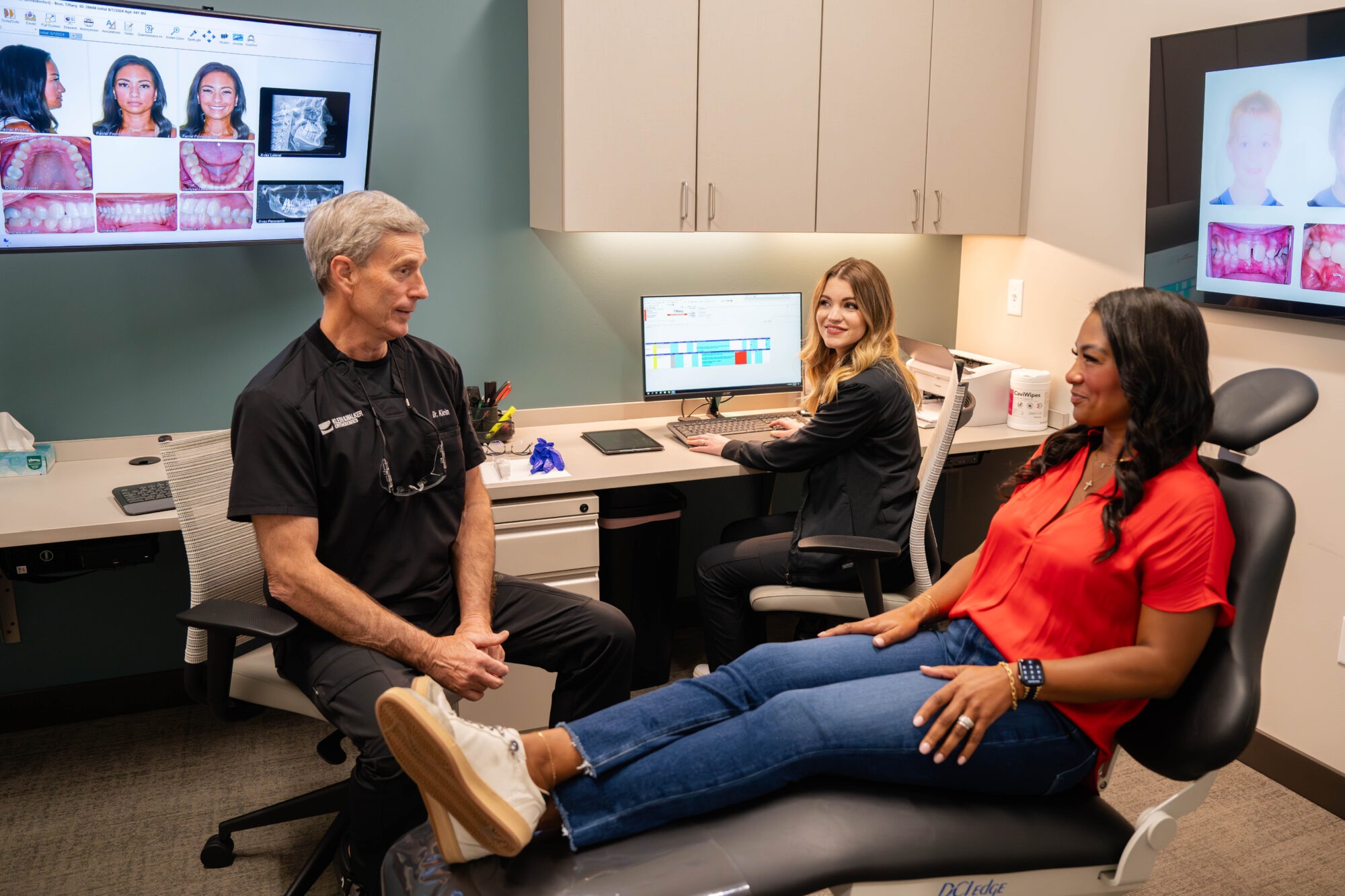
Choosing between Invisalign (clear aligners) and metal braces comes down to your lifestyle, treatment goals, and the complexity of your case. Invisalign uses removable plastic trays to shift teeth gradually, while braces use fixed brackets and wires for continuous movement. Both options deliver beautiful results when guided by experienced, board-certified orthodontists like Dr. Klein, Dr. Walker, or Dr. Weber at Klein Walker & Weber Orthodontics.
If you’ve been researching “Invisalign vs braces: which one is right for you?” you’re asking the right question. The best choice depends on factors unique to your smile. Patients across Olathe, Overland Park, and Lenexa weigh both options in our offices every week. Let’s break down what each treatment involves so you can feel confident about your decision.

What Are Invisalign and Braces?
Invisalign and metal braces are the two most widely chosen options for transforming your smile, and each takes a different path to the same goal. Straighter teeth and a healthier bite. Knowing what sets them apart helps you walk into your free consult with clearer expectations.
Invisalign is a system of clear, custom-made plastic trays worn over your teeth. Each tray is shaped slightly differently from the last, gently nudging your teeth into position over time. Because the trays are transparent and removable, many teens and adults find them an easy fit for daily life. You take them out to eat, brush, and floss, then pop them back in.
Metal braces use small stainless-steel brackets bonded to each tooth and connected by a thin archwire. The wire applies steady pressure, while tiny elastic ties hold everything together. Modern brackets are smaller and smoother than older designs, and patients can often personalize their look with colored ties at each visit.
Both treatments are backed by decades of orthodontic research and are recognized by the American Association of Orthodontists as effective methods for correcting crowding, spacing, and bite concerns. Dr. Klein, Dr. Walker, and Dr. Weber will recommend the option best suited to your specific case.
How Does Each Treatment Work?
Here’s the short answer. Invisalign uses a series of custom clear trays that you swap out every one to two weeks, gradually shifting teeth into place. Metal braces use bonded brackets and an archwire adjusted at regular visits to apply steady, continuous pressure. Both rely on careful planning by your orthodontist.
Invisalign relies on digital technology to map your entire smile transformation before treatment even begins. Your orthodontist will take digital pictures of your teeth, then use advanced software to design a series of custom trays. You’ll wear each set of aligners for about two weeks, and each tray applies gentle pressure to guide your teeth into their new positions. The trays are virtually invisible up close.
The process is precise. Every movement is mapped out before your first tray is ever made, which means you can often preview your final smile during your free consult.
Metal braces take a different approach. Small brackets are bonded directly to your teeth and connected by an archwire. During your visits, your orthodontist adjusts the wire tension to keep your teeth moving in the right direction. Have you ever wondered why those routine adjustments matter? Each one fine-tunes the pressure that gently moves your teeth.
Both treatments require regular check-ins to monitor your progress. With Invisalign, visits tend to be quicker since there’s no wire to adjust. Braces visits involve tightening and sometimes changing the archwire. Either way, your customized treatment plan is designed specifically for your smile.
What Are the Pros and Cons of Invisalign vs Braces?
Why Do Patients Love Invisalign?
Invisalign trays are nearly invisible, which makes them popular with teens and adults who want a discreet option. You can remove them to eat, drink, brush, and floss. That means no food restrictions and easier oral hygiene throughout treatment.
Many patients appreciate fewer office visits. Since you receive multiple sets of aligners at once, you don’t need to come in as often for adjustments.
Why Do Metal Braces Still Work Best for Many?
Metal braces work around the clock without any effort on your part. There’s no need to remember to put them back in after meals. They’re fixed in place, so consistency isn’t a concern.
For complex cases involving significant bite issues or major tooth movement, braces often deliver more predictable results. They give your orthodontist precise control over each tooth’s position.
Both options provide lasting results when you follow your orthodontist’s guidance and wear your retainer afterward.
Invisalign vs Braces: Side-by-Side Comparison
| Factor | Invisalign | Metal Braces |
|---|---|---|
| Appearance | Nearly invisible plastic trays | Visible metal brackets and wires |
| Comfort | Smooth plastic, minimal irritation | May cause temporary cheek or lip irritation |
| Treatment Time | Typically 6-18 months | Typically 18-24 months |
| Maintenance | Remove to brush and floss normally | Brush carefully around brackets |
| Diet | No restrictions (remove to eat) | Avoid hard, sticky, and crunchy foods |
| Office Visits | Less frequent check-ins | Regular adjustment visits |
| Best For | Mild to moderate alignment issues | Complex cases and significant bite concerns |
Keep in mind that treatment times vary based on your specific needs. Some patients finish faster, while others need more time to reach their ideal results.
Who Is a Good Candidate?
Are Clear Aligners Right for You?
Invisalign tends to be a great fit when you’re ready to commit to wearing your trays at least 22 hours a day and your case involves mild to moderate crowding, spacing, or alignment issues. Patients who value the flexibility of removing trays for special occasions, and those who care about easy brushing and flossing during treatment, often gravitate toward this option. If you live near our Olathe or Overland Park offices, we can walk you through whether you’re a candidate at your first visit.
Are Metal Braces Right for You?
- You have complex bite concerns or significant misalignment
- You’d rather not worry about remembering to wear something
- Your treatment needs continuous, hands-off pressure to stay on track
- Your orthodontist recommends braces for your specific case
Teens and adults can succeed with either option. The right choice usually comes down to how complex your case is and how disciplined you want to be about wearing your trays. An evaluation with Dr. Klein, Dr. Walker, or Dr. Weber will give you a clear answer for your specific smile.
So How Do You Actually Decide?
The honest answer is that you don’t decide alone. Both Invisalign and metal braces have decades of research behind them, and both can deliver the same end result for many patients. The real differences come down to your case, your lifestyle, and what you’ll actually stick with day to day.
A free consult at Klein Walker & Weber Orthodontics is the fastest way to get a real answer. Dr. Klein, Dr. Walker, or Dr. Weber will look at your teeth, talk through what matters to you, and tell you straight whether one option is clearly better for your case or whether it’s a true coin flip.
Frequently Asked Questions
Is Invisalign faster than braces?
Invisalign can be faster for mild to moderate cases, often finishing in 6-18 months compared to 18-24 months for braces. However, treatment time depends entirely on your individual needs. Complex cases may actually move faster with braces.
Do braces hurt more than Invisalign?
Both treatments cause some soreness as your teeth shift, especially after adjustments or switching to new aligners. Most patients find the sensation manageable. Braces may cause temporary irritation from brackets rubbing against cheeks, while Invisalign trays feel like pressure without sharp edges.
Can I switch from braces to Invisalign mid-treatment?
In some cases, yes. If your treatment has progressed enough, you might be able to transition to Invisalign to finish. Dr. Klein, Dr. Walker, or Dr. Weber can evaluate whether this makes sense for your situation.
Which is better for kids and teens?
Both work well for younger patients. Teens often love Invisalign for the discreet look, but they need to be responsible about wearing the trays consistently. Braces remove that factor entirely, which can be helpful for busy or forgetful teens.
Are Invisalign results as good as braces?
For most mild to moderate cases, yes. Invisalign and braces are both recognized by the American Association of Orthodontists as effective treatments. For complex bite correction or severe crowding, braces still give the orthodontist more precise control. Your free consult will tell you which fits your case.
How do I clean Invisalign trays?
Rinse your trays every time you remove them. Brush them gently with a soft toothbrush and clear, unscented soap. Avoid hot water, which can warp the plastic. Clean trays mean fresh breath and a healthier smile throughout treatment.
Will I need a retainer after either treatment?
Yes. Retainers are essential no matter which treatment you choose. Your teeth naturally want to shift back toward their original positions. Wearing your retainer as directed keeps your new smile in place for years to come.