
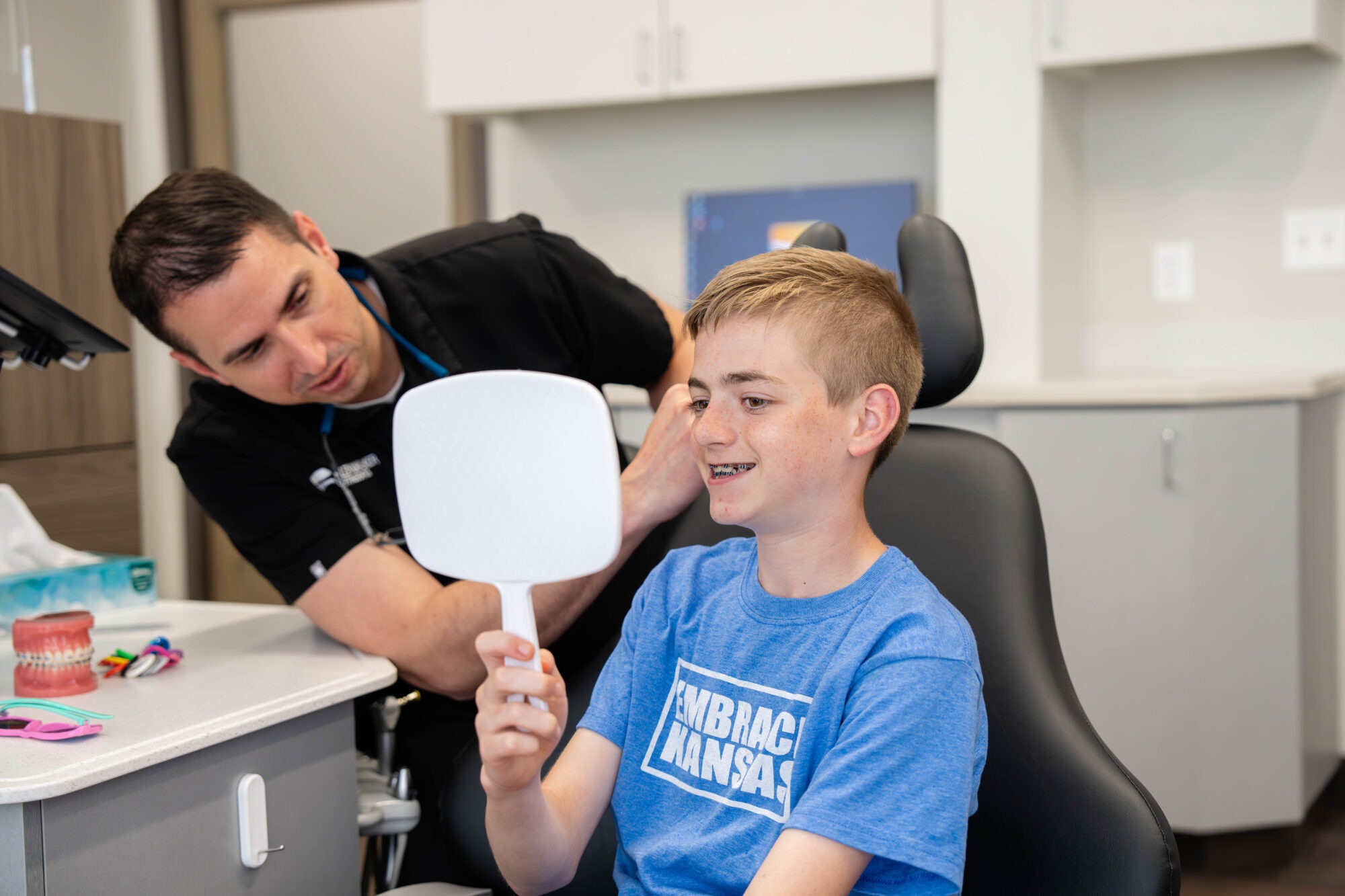
When should your child see an orthodontist for the first time? If you’ve been wondering this while watching your child’s smile change, you’re not alone. The American Association of Orthodontists recommends scheduling that first evaluation by age 7. At this age, your child has enough permanent teeth for an orthodontist to spot developing issues like crossbites, crowding, or jaw growth concerns. Early evaluation doesn’t always mean early treatment. It gives your orthodontist the chance to monitor growth and step in at the right time.
Many parents assume orthodontic visits should wait until all baby teeth fall out. By age 7, though, the first permanent molars and incisors have typically come in. This mix of baby and adult teeth reveals patterns that point to potential alignment or bite concerns.
At Klein Walker & Weber Orthodontics, board-certified orthodontists Dr. Klein, Dr. Walker, and Dr. Weber see children at this age regularly across our Olathe and Overland Park offices. Sometimes they recommend early intervention. Other times, they simply monitor your child’s development until the timing is right for treatment.
What Is an Early Orthodontic Evaluation?
An early orthodontic evaluation is a check-up performed around age 7 to assess how your child’s teeth, jaw, and bite are developing. It is not a treatment visit. It’s a chance for a specialist to take a careful look at growth patterns and flag anything that might need attention later.
During this visit, the orthodontist studies how baby teeth are being lost, how permanent teeth are coming in, and how the upper and lower jaws line up. Some issues are easier to address while the bones are still forming. Others can wait until more permanent teeth have arrived.
Early evaluation acts as a baseline. Even if no treatment is needed right now, the orthodontist gathers helpful information about your child’s mouth. That baseline makes future decisions easier and more accurate. Parents often leave with peace of mind, knowing exactly where things stand.
Early evaluation is also a great way to build comfort. Kids who visit an orthodontic office early tend to feel less anxious about future visits, which makes everything smoother down the road.
When Should a Child First See an Orthodontist?
Age 7 works for most kids. Some children benefit from being seen even earlier if a parent or pediatric dentist notices something unusual, such as a severe crossbite, a thumb-sucking habit that’s reshaping the mouth, or jaws that look off-balance.
The goal isn’t to rush kids into braces. It’s to catch issues during the years when growth can be guided gently. Waiting until every permanent tooth has come in sometimes means missing the easiest window to make corrections.
What Happens at Your Child’s First Orthodontist Visit
Your child’s first orthodontist visit is designed to be comfortable and stress-free. Here’s what you can expect.
A Friendly Welcome
Our team greets families warmly from the moment they walk in. We know this might be your child’s first time in an orthodontic office, so we take time to make them feel at ease.
Visual Exam and Digital Scans
Dr. Klein, Dr. Walker, or Dr. Weber will examine your child’s teeth, bite, and jaw alignment. Digital pictures replace the messy impressions of the past, making the process quick and comfortable.
Review of Dental and Medical History
You’ll discuss your child’s oral health background, any habits like thumb sucking, and family history of orthodontic issues. This information helps create a complete picture.
Growth Pattern Discussion
The orthodontist will explain what they observe about your child’s jaw development and how permanent teeth are coming in. They’ll talk through timing for any potential treatment.
Your Customized Plan
You’ll leave with either a treatment recommendation or a monitoring schedule. Most children don’t need immediate intervention. Many families return for periodic check-ups until the right treatment window opens.
The entire visit typically takes 30 to 45 minutes. There’s no pressure, no obligation. Just helpful information to guide your decisions.
Benefits of Early Orthodontic Evaluation
Bringing your child in by age 7 offers real advantages for their long-term oral health. The benefits fall into a few key categories worth understanding.
How Does Early Evaluation Help Bite and Jaw Issues?
- Catches bite issues early. Crossbites, underbites, and overbites are easier to address while the jaw is still growing and more adaptable.
- Jaw growth can be guided. An orthodontist can create space for incoming adult teeth, reducing crowding before it becomes severe.
- May eliminate the need for extractions. Early intervention can prevent situations where removing permanent teeth becomes necessary.
- Addresses harmful habits. Thumb sucking, tongue thrusting, and mouth breathing can reshape the jaw over time. Catching these habits early reduces their impact.
What Are the Long-Term Benefits for My Child?
- Daily function improves. Proper alignment supports clearer speech, easier chewing, and better breathing.
- Boosts confidence. Children with aligned smiles often feel more comfortable socially during their school years.
- Can shorten treatment later. Kids who receive early intervention sometimes need less time in braces or clear aligners as teenagers.
According to the AAO, early evaluation gives orthodontists a chance to identify issues while they’re still developing, which can lead to more treatment options and better outcomes for many families.
Phase 1 vs Phase 2 Treatment. What’s the Difference?
Phase 1 treatment (ages 6-10) guides jaw growth and creates space using appliances like expanders or partial braces, while Phase 2 (ages 11+) aligns all permanent teeth with full braces or clear aligners. Not every child needs both phases. Understanding the difference helps you know what to expect.
| Aspect | Phase 1 Treatment | Phase 2 Treatment |
|---|---|---|
| Typical Age | 6-10 years old | 11+ years old |
| Teeth Present | Mix of baby and permanent teeth | Most or all permanent teeth |
| Common Appliances | Expanders, partial braces, space maintainers | Full braces, clear aligners |
| Goals | Guide jaw growth, create space, correct severe bite issues | Align all teeth, finalize bite, complete smile transformation |
| Duration | Usually 9-18 months | Typically 12-24 months |
What Is Phase 1 (Interceptive) Treatment?
This phase addresses specific issues that benefit from early correction. Palate expanders widen a narrow upper jaw. Partial braces guide specific teeth. Space maintainers hold room for permanent teeth that haven’t come in yet.
What Does Phase 2 Treatment Involve?
Once most permanent teeth have come in, Phase 2 focuses on aligning the entire smile. Metal braces, clear braces, or clear aligners move teeth into their final positions.
Do All Kids Need Both Phases?
No. Many children skip Phase 1 entirely and go straight to Phase 2 as teenagers. Dr. Klein, Dr. Walker, and Dr. Weber only recommend early treatment when it provides a clear benefit.
What to Expect at Your Free Consultation
Your child’s first visit at Klein Walker & Weber Orthodontics is a free consult. There’s no financial commitment, no pressure to start treatment, and no surprise fees. You’ll get a complete evaluation, an honest opinion about whether your child needs care now or later, and clear next steps that fit your family.
Whether you visit our Olathe office or our Overland Park office, the experience is the same. A careful exam, a real conversation, and a plan built around your child’s specific needs.
What Are the Signs Your Child Needs to See an Orthodontist?
Sometimes the signs are obvious. Other times, they are subtle and easy to miss in the middle of a busy school year. Watch for these indicators that suggest it’s time to schedule an evaluation.
Tooth Eruption Patterns
- Baby teeth falling out unusually early (before age 5) or late (after age 7-8)
- Permanent teeth coming in crooked or in unexpected positions
- Teeth that appear crowded or blocked from coming in
Functional Concerns
- Difficulty chewing food thoroughly
- Biting the cheek or roof of the mouth frequently
- Speech issues like lisping or unclear pronunciation
These everyday struggles often point to bite alignment that needs a closer look.
Jaw and Bite Issues
- Jaws that shift to one side when closing
- Clicking or popping sounds when opening the mouth
- Upper and lower teeth that don’t meet properly
- A noticeable underbite, overbite, or crossbite
Habits and Breathing
- Thumb sucking or pacifier use continuing past age 5
- Consistent mouth breathing, especially during sleep
- Tongue thrusting when swallowing
Habits like these can quietly shape how the jaw develops over months and years.
Visual Signs
- Teeth that stick out noticeably
- Gaps between teeth that seem excessive
- Facial asymmetry or an unbalanced profile
If you notice any of these signs, don’t wait until age 7. Schedule an evaluation sooner to get professional guidance.
Frequently Asked Questions
Is age 7 too young for braces?
Age 7 is a great time for an evaluation, but most children won’t get braces at this age. The visit helps identify developing issues and determine the best timing for treatment. When early intervention is needed, it typically involves appliances like expanders rather than full braces.
Will my child definitely need braces if we visit early?
Not at all. Many children who come in at age 7 simply need monitoring. Dr. Klein, Dr. Walker, or Dr. Weber will track your child’s development and recommend treatment only when it’s truly beneficial. Early visits give you information, not obligations.
What’s the best age to start orthodontic treatment?
The best age for an evaluation is 7. The best age for actual treatment depends on the child. Most kids start braces or aligners between ages 10 and 14, when most permanent teeth have come in. Some benefit from Phase 1 treatment as early as age 7 or 8 if the orthodontist sees a specific issue worth addressing early.
Does my child need a referral from their dentist?
No referral is necessary. While many dentists do refer patients to orthodontists, you can schedule a free consult directly with our office anytime you have concerns about your child’s smile or bite.
How long does the first orthodontic visit take?
Plan for about 30 to 45 minutes. This gives us time for a thorough exam, digital pictures, and a conversation about what we observe. You’ll leave with clear next steps, whether that’s starting treatment or scheduling a future check-up.
Can baby teeth get braces?
Yes, in certain situations. Phase 1 treatment sometimes involves placing brackets on specific baby teeth or a combination of baby and permanent teeth. This approach addresses issues that benefit from early correction while the jaw is still growing.
What if we wait until all permanent teeth come in?
Waiting works fine for many children. Some issues, though, are easier to correct during growth spurts. Delaying evaluation could mean missing the window for simpler, more effective treatment. An early visit lets you make an informed decision rather than guessing.
Early evaluation is one of the simplest ways to get clear answers about your child’s smile and feel confident in the decisions ahead. Whether your child needs treatment now, later, or not at all, learning what to look for at age 7 gives every family a head start. Schedule your child’s free consult with Klein Walker & Weber Orthodontics when you’re ready.